News | 2 March, 2026
CaetanoBus leads the world’s first OEM-led Hydrogen BRT Consortium, marking strategic shift from bus OEM to Mobility Solutions Provider
CaetanoBus leads the world’s first OEM-led Hydrogen BRT Consortium, marking strategic shift from bus OEM to Mobility Solutions Provider
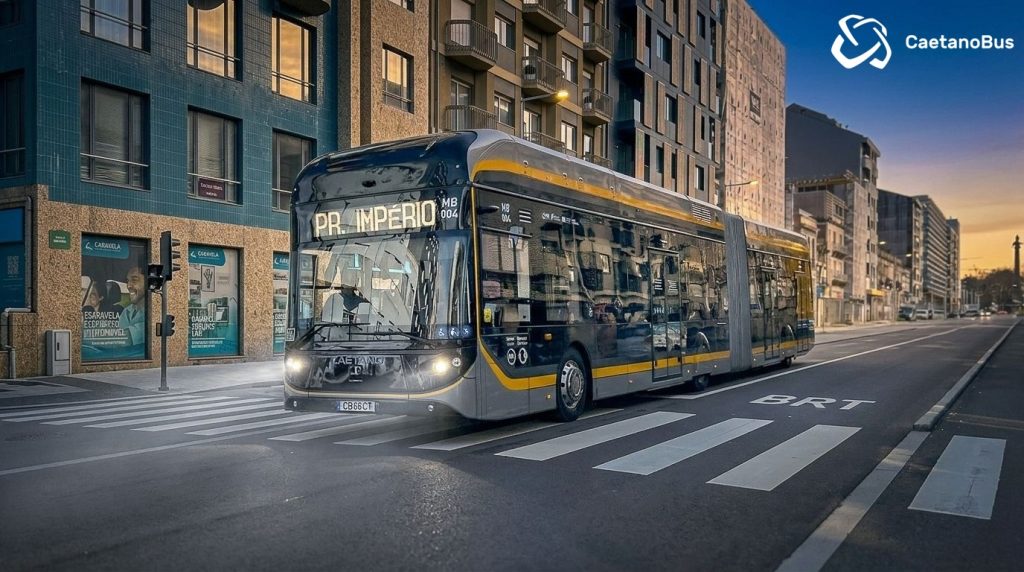
The city of Porto in Portugal has launched its first hydrogen-powered Bus Rapid Transit (BRT) system, with CaetanoBus leading the consortium and delivering a fully integrated, one-stop-shop BRT hydrogen mobility solution. The start of the BRT operation marks the world’s first bus OEM-led hydrogen BRT consortium and represents a decisive strategic shift from traditional vehicle manufacturing to prime contractor of integrated zero-emission mobility solutions.
In this landmark project, CaetanoBus assumes the role of consortium leader, delivering far more than buses, acting under a “One Face to the Customer” approach and providing a comprehensive, end-to-end hydrogen mobility solution with long-term operational commitment, in collaboration with carefully selected strategic partners on a project-by-project and country-by-country basis.
Under the scope of the contract, CaetanoBus assumed full coordination of all stakeholders and integration of key system components, including the supply of hydrogen fuel cell electric BRT vehicles, the deployment and integration of a local green hydrogen production system, the installation and commissioning of the Hydrogen Refueling Station (HRS) infrastructure, the deployment of photovoltaic panels for on-site renewable energy generation, the integration of depot energy management and fleet optimization systems, design of the hydrogen-ready maintenance workshop and the provision of long-term maintenance supported by AI and predictive models, as well as lifecycle support across all components of the ecosystem.
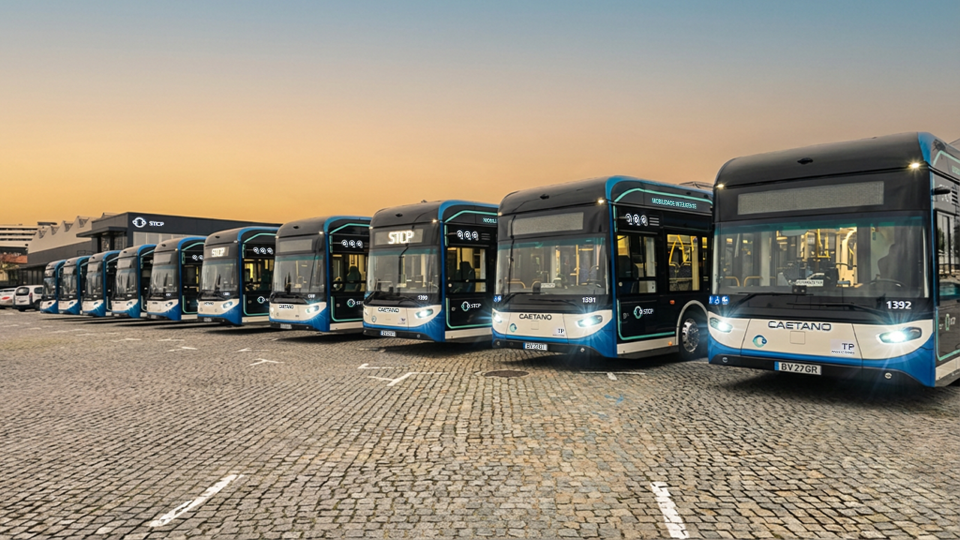
This integrated architecture enables Metro of Porto to operate a fully decarbonized BRT corridor with twelve CAETANO H2.CityGold 18-meter high capacity buses featured with doors on both sides to accommodate central platform boarding along the corridor, supported by a local production of green hydrogen system by PRF and renewable solar energy system by DST Solar, both selected members of the consortium led by CaetanoBus for this project in Portugal.
By consolidating technical leadership and accountability within a single consortium structure, CaetanoBus ensures system-wide performance optimization, operational reliability, reduced implementation complexity, accelerated deployment timelines and lower total cost of ownership (TCO) risk for the transport authority.
The BRT operation runs on hydrogen fuel cell electric buses engineered by CaetanoBus by integrating Toyota fuel cells technology, combining zero-emissions, extended operational range, rapid refueling capability and enabling high-capacity urban transport without compromising service efficiency.
This project represents a decisive strategic step in the evolution of CaetanoBus as Nuno Lago de Carvalho, member of the Executive Committee and CCO at CaetanoBus, highlights: “By leading the consortium to deliver a fully integrated mobility solution, we demonstrate our capability to structure and manage complex, multi-stakeholder zero-emission mobility ecosystems from design through implementation and real-world operation. Beyond deployment, this project enables CaetanoBus to capture comprehensive technical and economic performance data across the entire lifecycle, from system engineering and infrastructure integration to daily fleet operation. This data-driven approach allows us to simulate, refine and validate a scalable, technically robust and commercially sustainable service model that will support our future Energy & Mobility as a Service offer”.
CaetanoBus’ strategic planning aims as a next step to present a pay-per-use offer, where public and private operators will have the option to access the fleet capacity they require together with the full supporting energy infrastructure and maintenance under a fully integrated operational model, enabling payment on a per-kilometer basis structured as OPEX. This approach significantly reduces upfront capital expenditure (CAPEX) requirements and accelerates the transition toward sustainable mobility.